

How would we hush a protesting gut? The answer lies in your mind's double view of totality.
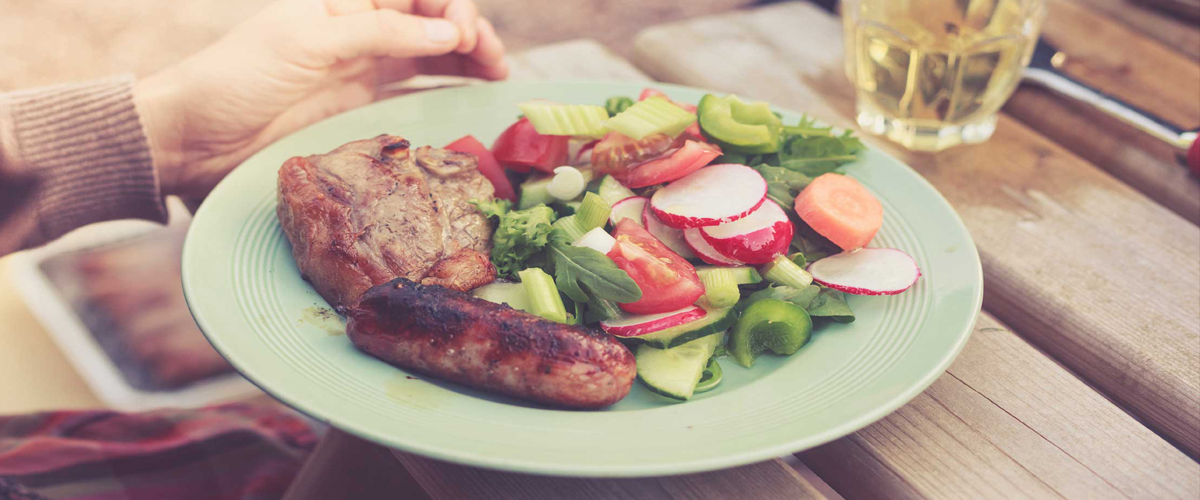
Seven approaches to tackle your appetite
How would we quiet a protesting gut? The answer, individual hungry men, lies in your mind's double view of completion. "Satiation" is the sentiment completion toward the end of a feast. "Satiety," then again, is a measure of to what extent it takes before you're ravenous once more.
Obviously, nourishment organizations don't need you to stay fulfilled. Fifteen years prior, University of Sydney specialist Dr Susanna Holt, who positioned sustenances as per their satiety power, drew closer various nourishment organizations for financing to proceed with her work.
Regardless she holding up: the organizations were inspired to diminish the satiety of their nourishments - so individuals would purchase more. Take control. Expert satiation and you can hold part sizes under wraps; help satiety and you can forestall unnecessary nibbling.
Perused on and you'll have the capacity to fill your gut - and afterward lose it.
Recognize what (and when) to drink
Think about your stomach as an inflatable. As you eat, it extends. What's more, once it grows to its most extreme limit, the sensors all through your digestive framework tell your cerebrum's amygdala that it's a great opportunity to stop - paying little mind to what you've filled your stomach with.
As Dr Alan Aragon, Men's Health's nourishment counsel, puts it, "Eating a large portion of a move of tissue would make you feel full." To extend your stomach without stuffing it with kilojoules (or paper items), you require water.
Aragon prescribes drinking a glass 30 minutes before a supper and tasting habitually while eating. Water-rich sustenances - soup, plate of mixed greens, natural product, and vegetables - additionally fill your midsection without including over the top kilojoules.
Top off with fiber
Fiber draws water from your body and from the sustenance you've eaten, and transports it to your intestinal tract, conveying that dinner finishing satiation, as indicated by a study by analysts at the University of Washington.
Fiber may support satiety, as well. Since it goes through the body undigested, fiber moderates the retention of supplements and makes you feel more full more, as indicated by a recent report by scientists at the University of Minnesota.
A recent report in the Journal of the American Dietetic Association found that including 6 grams of solvent fiber, (for example, ground flaxseed) to yogurt gave the satisfying force of an extra 1090kJ. To profit from fiber, go for 25 to 35 grams every day.
Refined sugars, then again - like in Krispy Kremes - are satiety executioners. At the point when members in a 2008 British study drank a high-carb drink for breakfast, they reported feeling hungrier at lunch than when they drank a refreshment high in protein. Here's the reason: an excess of sugar brings on a quick spike in insulin, which causes a sugar crash later and triggers a longing for more sustenance.
Pack in the protein
Protein, your muscle-developing fuel, likewise has the ability to raise your levels of peptides - combined amino acids - in your stomach. "These peptides start cross-chat with the mind on an atomic level to convey satiety signals," says Aragon. He proposes going for 20 to 40 grams of protein at every feast.
Trap your stomach full
You can't believe your gut. Possibly you've caught wind of the Cornell University study with the trap bowls: individuals who ate soup from dishes that constantly refilled ate 73 for every penny more than the individuals who ate from normal dishes. The kicker: they appraised themselves as feeling not any more full.
Researchers call this utilization of tactile signs to survey totality "learned satiation." Try this: dole out a segment of sustenance onto a littler plate and quickly put the rest in the fridge. When you eat, the visual prompt of a perfect plate will flag that you've had enough - and the scraps will stay beyond anyone's ability to see and out of brain, in the refrigerator.
Maintain a strategic distance from diversion
What you're doing while you eat may be as imperative as what you're eating. You're prone to devour a great deal more nourishment when you're diverted by TV, music, or a PC, as indicated by a 2009 audit of studies distributed in Trends in Food Science and Technology.
Eating while diverted interferes with cerebrum to-stomach satiation signals, making it harder to screen your nourishment admission. Additionally, diversion raises the danger of gorging the wrong sorts of sustenances - think popcorn at the motion pictures.
The takeaway from this is basic: When you eat, really eat. Pull up a chair. Concentrate on your dinner. Avoid Facebook and don't droop before the TV. Pay consideration on your first plate of sustenance and you may find that you don't have to retreat for quite a long time.
Scale down your snacks
For whatever length of time that you're eating satiety-instigating supplements at each feast, you'll lessen your desire for nourishment between dinners, says Aragon. Be that as it may, if your gut's snarling and your next feast is far away, a nibble can keep you from doing a Homer Simpson impression at supper.
The mystery is to keep the nibble, very much, snacksized. Get nourishment that is high in protein or fiber, similar to meat jerky, nuts or curds, and hold your admission under 800 kilojoules, says Aragon. That way, you'll keep gut-murmuring under control without pressing in a smaller than expected feast.
Whatever you do, skirt the handled snacks that prime your gut for all the more, all the more, more. It's the manner by which a donut prompts a snarling stomach before lunch. It's the means by which a drive-through supper can prompt a plate of cheddar and toast at midnight. What's more, it's likewise how you can eat throughout the day and never feel full.
Relish the flavors
Your paunch is thundering, and a server sets a delicious burger before you. Fight the temptation to unhinge your jaws and gulp down it. Completely biting your nourishment increments what scientists call "oro-tactile components," which send satiation signs to your cerebrum, helping you feel full on less sustenance, as per a recent report by Dutch specialists.
Study members who bit every chomp for an additional three seconds wound up devouring less. Also, make certain to avoid those sippable feast substitution shakes and kilojoule-obstructed smoothies from the juice joint.